
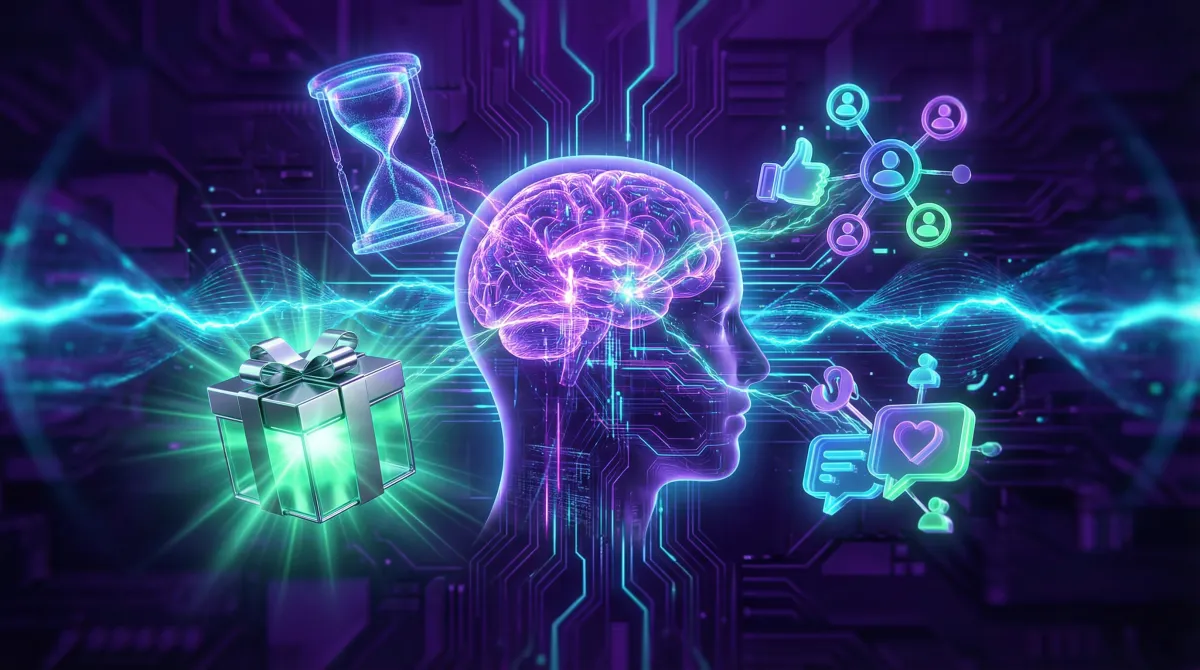

A powerful tool used by businesses is incentive motivation psychology - used to encourage engagement.
By understanding behavioural triggers, marketers can more effectively create promotions that increase participation and investment return.
To increase participation, marketers have to consider ‘behavioural economics’ or what drives an individual make a financial decision and furthermore, how behavioral economics expose systematic departures from rationality due to heuristics (when our brain takes information ‘short cuts’), bounded cognition, and emotional influences.
In other words, at the heart of behavioural economics is the observation that people are not rational in the way that traditional economic theory assumes.
We are impulsive, emotional, impatient, don’t think things through, don’t process information well, and are attracted to pretty, shiny, brightly coloured things.
So, what makes incentives more effective? Here are some of the behavioural triggers:
1. The power of immediacy when it comes to rewards
If there’s an immediate benefit to an incentive, then people are more likely to engage. The principle of instant gratification explains that when rewards are delayed, they lose appeal.
Promotions that boast instant cashback, discounts or instantly won prizes tend to perform better than those with long-term, slower benefits.
2. Exclusivity and Scarcity- the benefits of limited supply
People place a higher value on objects that are in limited supply, according to the scarcity principle.
This includes exclusive discounts, VIP only promotions and limited-time offers which drive urgency and the need to participate.
3. The importance of Peer Influence and Social Proof
As humans are social creatures, we take cues from others and this can be harnessed when it comes to engaging with promotions.
The behaviour of consumers can be heavily influenced by what others are interested in, which makes social proof a key element of successful marketing.
4. Using loss aversion, and ‘The Fear of Missing Out’ (FOMO)
People are more likely to dodge a potential loss than to acquire a gain.
By framing incentives with the spin of a potential loss, such as ‘This offer is for a limited time only so don't miss out!’, can seem far more compelling than simply pushing a reward.
5. Making rewards feel earned through ‘Effort Justification’
If there’s effort placed into achieving something, it’s more likely to be valued.
It comibines our natural ‘intrinsic motivation’ or internal desire to accomplish a goal, with our ‘extrinsic motivation’ which kicks in with the promise of external rewards and praise.
Gamification can play a part in this as progress bars, challenges and rewards that are tiered can make participation feel effortless and interactive, as well as playing into behavioural economics incentives, which states that effort enhances a reward’s value.
6. Personalising Incentives:
Incentives that only cater to one audience can be less effective than those that have been tailored and designed for an individual’s actual preferences; AI and marketing that’s data driven enables businesses to offer more personalised and engaging content.
So, here’s the takeaway…
In a nutshell, the psychology of understanding incentives means that businesses can create promotions that are effective and drive real participation.
Using the principles of instant gratification, social proof, scarcity, loss aversion and intrinsic vs extrinsic motivation, marketers can compel audiences with offers that truly resonate.
